
The platform
One system. Five capabilities.
One data spine.
FarmSwitch is not a reporting layer bolted onto a farm. It is the system the farm actually runs on — where the plan is made, the work is scheduled, the money is tracked and the result is verified. Every capability writes to the same record, so the operational view and the financial view can never disagree.
How they fit together
Each one makes the next four worth more
The crop programme loaded in Operate is what Supply procures against. The alert raised in Monitor is what Assist responds to. The contractor booked through Services is verified back through Monitor. You can take any one of them on its own — most people do — but they compound.
-
 Monitor
Verifies what is actually happening, from orbit
Monitor
Verifies what is actually happening, from orbit
-
 Operate
Runs the crop programme, task by task
Operate
Runs the crop programme, task by task
-
 Assist
Puts people on the farm when a signal fires
Assist
Puts people on the farm when a signal fires
-
 Supply
Delivers the inputs the programme calls for
Supply
Delivers the inputs the programme calls for
-
 Services
Books the machinery that executes it
Services
Books the machinery that executes it
One data spine — one record per farm Every capability reads from and writes to the same record, so the operational view and the financial view are never two different answers.
- A verified farm recordPlanted area, crop type and performance, independently confirmed
- Live cost and P&L per fieldTracked against budget as the season runs, not reconstructed after it
- Audit-ready reportingFor a credit committee, an investment committee or a DFI, straight out of the work
01 — FarmSwitch Monitor
Verified field intelligence, delivered remotely
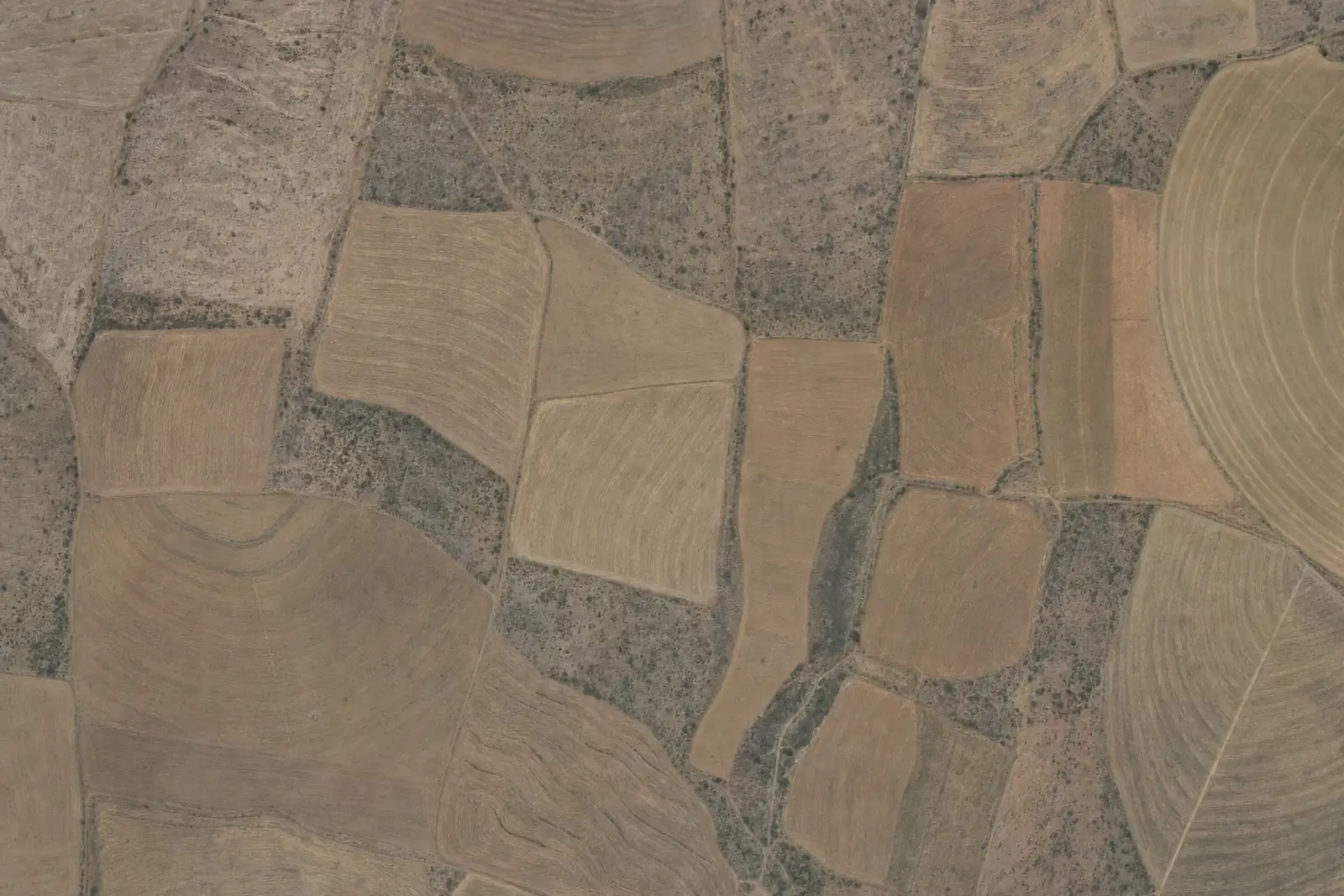
Monitor turns a list of farms into a live, independently verified view of what is actually happening on the ground. It needs nothing from the field: satellite and radar imagery, soil and weather data and our analytics do the verification.
It begins with a baseline — digital field boundaries, seven seasons of productivity history, soil profile and terrain per field. From there the platform follows the season and tells you where reality has parted company with the plan.
- Planted hectares verified by radar. Radar sees through cloud, so what was planted, where and when is confirmed regardless of weather — and reconciled against the crop plan that was budgeted or financed.
- Crop-type verification. Confirmation that what went into the ground matches what was planned for it.
- Crop health every five to seven days. Optical imagery tracked against the field's own multi-season norm and against peer farms in the same district, with gap-fill through the cloudiest weeks.
- Productivity zoning. Seven seasons of history separate consistently strong land from consistently weak land, which is what makes variable-rate application worth doing.
- Yield-direction indicator. Each field ranked against its own history and its district peers, flagging where a crop is tracking materially below where it should be at that growth stage.
- Alerting that does not wait for the weekly cycle. Sustained crop-health decline, planted area short of plan, or a field below its own norm is raised the day it crosses the threshold.
Peer deviation, not just decline
A district-wide drought and one farm underperforming its neighbours look identical on a single-farm chart. Separating them is the difference between a provisioning question and a phone call this week.
Three audiences, three channels
A read-only portfolio dashboard for funders and credit teams. A weekly digest to the inbox, exceptions first, no login required. A weekly plain-language digest to the farmer by email or WhatsApp.
Deliberately light dependencies
No core system change, no engineering build on your side, and no field logistics. A one-time read-only extract of farms and plans is enough to start.
02 — FarmSwitch Operate
The farm runs on the platform
Monitor tells you what the satellite can see. Operate tells you what the farm is actually doing — and it does so days or weeks earlier, because a missed task shows up the moment it is missed, long before it is visible in a vegetation index and much longer before it reaches the financials.
Crop programmes are loaded onto the platform and the season is run from there. Where a facility is in place, use of the system can be made a condition of it.
- Crop programmes loaded and tracked. Nutritional and protection programmes with tasks assigned, scheduled and tracked to completion, with full input traceability.
- Cost against budget, line by line. Profit and loss per field and per enterprise as the season progresses — not reconstructed afterwards.
- In-field scouting app. Geo-tagged, timestamped, photo-evidenced observations from the person actually standing in the field.
- Structured PO and SO workflows. So procurement and sales tie back to the field they belong to.
- AI-based agronomic prompts. Support and nudges to the farmer against the programme they committed to.
- Adoption monitoring. Training tracked and usage measured, so that uptake is real rather than nominal.
03 — FarmSwitch Assist
Where the software raises a flag, people go and deal with it
This is the capability that does not exist anywhere else, and it is the reason our platform gets used instead of abandoned. Software can tell you a field is in trouble. It cannot drive out there, walk the boundary, work out that the irrigation is short on the western edge and agree a corrective plan with the person farming it.
Assist deploys agronomists and experienced mentor farmers into the field — triggered by a signal from the platform, tracked back through the platform, and closed out only when the season is stabilised.
Triggered by the platform, not by a calendar
Crop-health decline, task-completion gaps, profit-and-loss deterioration or a yield-direction variance are what put a farm on the list — rather than a rotation that visits everyone equally regardless of need.
Diagnose, plan, follow through
An on-site diagnostic visit, a written corrective action plan, a defined follow-up cadence, and remote agronomic support between visits with progress tracked against the plan.
It works in both directions
The same signals that identify a farm sliding also identify one pulling ahead. Deteriorating operations get support before they fail; strong ones get support to expand.
04 — FarmSwitch Supply
Fund inputs, not cash
Because the crop programme is already on the platform, the input requirement is already known — quantities, timing and field allocation fall straight out of the approved programme. Orders go to vetted suppliers and the facility pays those suppliers directly.
The farmer receives the input rather than the money to buy it. That single change removes the most common cause of production-finance failure, and it guarantees the thing that matters most to yield: the right product, in the right quantity, at the right point in the programme.
- Cash-diversion risk removed. Funds flow from the facility to a verified supplier against a specific, approved programme line.
- Programme adherence guaranteed. Late fertiliser is not an administrative problem, it is a yield problem — and it is the largest controllable driver of repayment capacity.
- Better prices through aggregation. Buying across the portfolio secures pricing an individual grower cannot, so the fee is funded from improved procurement rather than added to the input bill.
- Procurement handled end to end. Ordering, delivery scheduling and reconciliation done on the farmer's behalf.
- Margin kept inside the relationship. Input margin that currently flows entirely to agri-retail becomes a shareable pool for the funder.
05 — FarmSwitch Services
A crop programme is only as good as the machine that turns up
Vetted service providers — mechanisation, drone application, soil sampling, harvesting, transport, packhouse and storage — booked, tracked, paid and rated inside the platform. Requirements are triggered automatically from the crop programme, so the booking exists before the window opens rather than after it has closed.
- Execution certainty. Guaranteed access to vetted providers removes one of the largest and least discussed causes of yield loss.
- Payment to the provider, not the farmer. As with inputs, funds advanced for mechanisation, spraying or harvest cannot be redirected.
- Known quality, not assumed quality. Vetted providers with tracked performance and rated delivery.
- Our own capability behind it. Where the market cannot deliver, our mechanisation hubs and drone application services step in directly.
- A pipeline of bankable SMEs. The service providers themselves become visible, transacting businesses.
The spine
Why one platform beats five good ones
Most farms and most lending books already have the pieces. What they do not have is a single record that all of them write to.
| Point solutions, stitched together | FarmSwitch |
|---|---|
| Annual financial statements, reviewed once a year and already historic | Live profit and loss per field, updated as the season runs |
| Site visits to verify activity — costly, infrequent, and only as good as the day they happened | Satellite and radar verification every five to seven days, without travel |
| Planting dates and input quantities that cannot be checked from a desk | Every task timestamped, GPS-located and photo-documented |
| Advisers and relationship managers carrying dozens of clients with almost no field data | The at-risk farms surface themselves; the rest do not need chasing |
| Money released against a static seasonal budget | Release tied to verified task completion and verified planted area |
| Intervention triggered by default or by a failed harvest | Intervention triggered by a deviation alert, weeks earlier |
| Operational reporting and financial reporting that have to be reconciled | One record underneath both, so there is nothing to reconcile |
FarmSwitch integrates established remote-sensing and agronomic data sources rather than rebuilding them — including satellite and radar imagery, soil and terrain layers, weather and rainfall feeds, and regional production benchmarks. The value is in the spine that joins them to the work actually being done on the farm.
See it running on a real season
The quickest way to judge this is to look at a live programme rather than a demo environment. We will walk you through one.